IRISH SONGS – IN HONOUR OF ST. PATRICK’S DAY
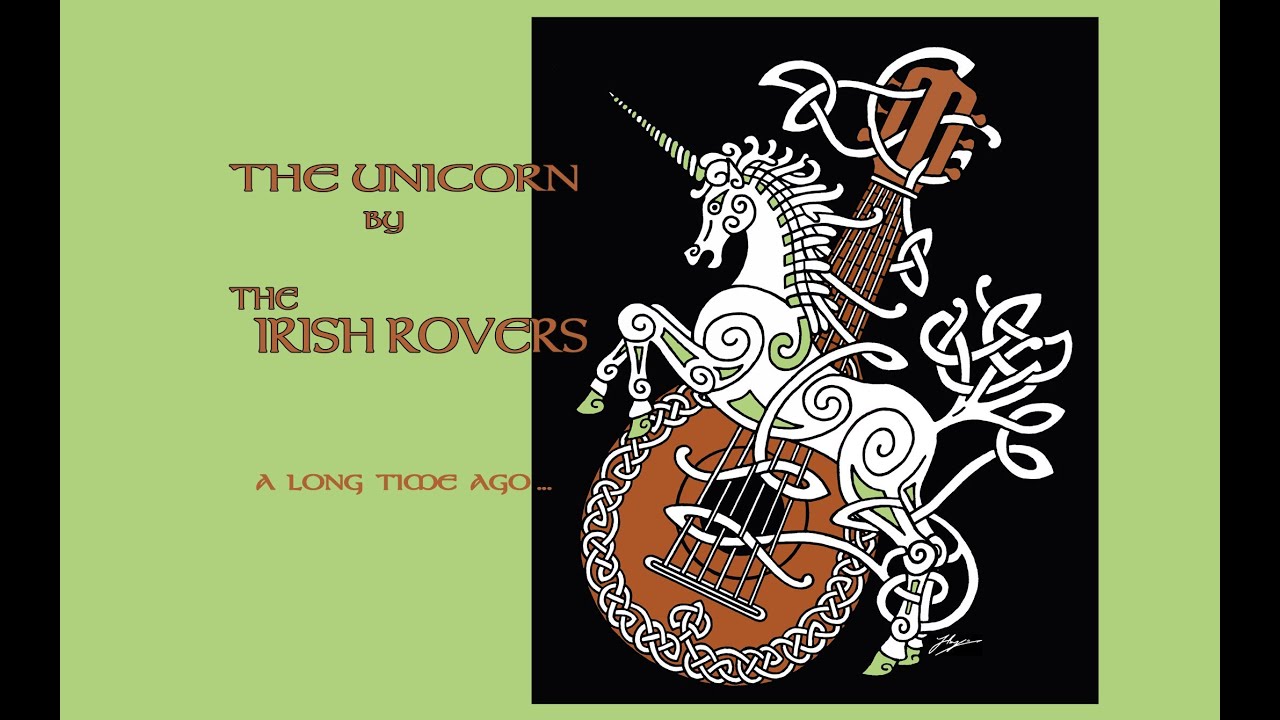
7. THE UNICORN SONG – 1962
 This song by accomplished author Shel Silverstein was made very popular by The Irish Rovers in 1968. Silverstein was fascinated by folklore, myths, fables and legends. The lyrics to the song were printed as a poem in Silverstein’s book Where the Sidewalk Ends. What seems to be a timeless Irish folk song was written by a Jewish children’s book author from Chicago.
When the Irish Rover’s picked it up for recording, their – – “very, very authentic Irish sound and ethnic background” complemented the subject of the piece. It remains one of the best-known songs of the Irish Rovers’ long career, who were named Band of the Year at the JUNO Awards in 1968. It was a #2 hit for them in North America and #5 in Ireland.
It can still be heard regularly in Irish Pubs. 
In the original version of the song, The Irish Rovers speak half of the lyrics, as well as part of the 4th Chorus. The final line of the 5th verse is spoken freely without the music: “And that’s why you’ll never see a Unicorn to this very day”. Many people today also claim there are gestures that accompany the song.
 A ballad set to an ancient Irish melody. The words were written by English songwriter Frederic Weatherly in Bath, Somerset, in 1910, and eventually set to the Irish tune of “Londonderry Air” when his Irish-born sister-in-law, living in the U.S., sent him a copy of the song in 1913.
 an unofficial signature song of Irish Canadians due to our own close ties to Great Britain.
 Written by Bronxeville, New York composer Mort Dixon, whose first hit was That Old Gang of Mine in 1923, followed by Bye Bye Blackbird in 1926.
 song during the same year, topping the North American charts at #14. It is likely that no other single person has been directly responsible for the sale of as many ukuleles as Arthur Godfrey, an enormously popular television star of the 1950’s and 60’s.
 A Traditional Shaker hymn “Simple Gifts”, words added by Sydney Carter, 1963. Carter was an English poet, song writer and folk musician who wrote many folk songs, carols and gospel songs. During WWII he served as a volunteer in the Friend’s Ambulance Service in Egypt, Palestine and Greece, and was a self-described pacifist.
 Also known as “Cockles and Mussels”, or “In Dublin’s Fair City”, this popular song is set in Dublin, Ireland, and has become the unofficial anthem of Dublin. The song is sung regularly by fans at soccer and hurling matches, and June 13 has been officially declared Molly Malone Day.
 This song is the unofficial anthem of all those who consider themselves to be “Irish Americans”.



 Cat's Ukulele Songs